/59748.tmb-300v.png?sfvrsn=9885965b_2 "For the future - publication thumbnail")
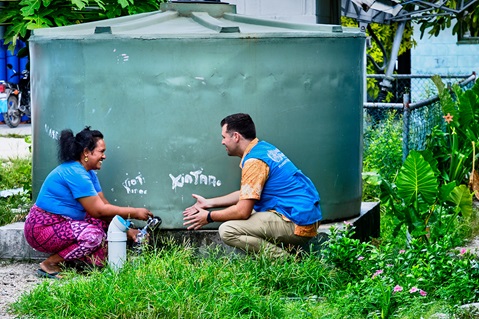

Communities in Navunikabi, Fiji, are set to benefit from improved, climate-resilient health services following the official opening of the newly renovated and solarized Navunikabi Nursing Station today.
Navunikabi Nursing Station serves over 1500 people, including the community of Navunikabi Village, schools, nearby settlements, and an agriculture station. The nursing station provides an array of critical services, including maternal and child health, general outpatient, and comprehensive childhood care to reduce mortality and morbidity in children under five.
The renovations, including construction of a new waiting room and toilet block, new roofing and the installation of solar panels and power system, ensure that the health facility is better able to provide these critical services in a changing climate.
“Today, we celebrate not just the opening of a renovated health facility but our commitment to compassionate care, the dedication of our healthcare professionals, and the promise of a healthier community,” said Hon. Ratu Dr Atonio Rabici Lalabalavu, Fiji’s Minister of Health and Medical Services (MHMS).
These works were made through the Strengthening Health Adaptation Project: Responding to Climate Change in Fiji (SHAPE project), a multi-year project funded by the Korea International Cooperation Agency (KOICA) and implemented in partnership with the World Health Organization (WHO) and the Ministry of Health and Medical Services (MHMS).
Sophie Genay-Diliautas, WHO Deputy Representative to the South Pacific, highlighted the impact of the SHAPE Project in strengthening Fiji’s health system: “WHO is honoured to have been part of this project, and to be a part of this continued partnership. Together, this investment helps to ensure that communities, and the health workers who serve them, are better protected, prepared, and supported into the future.”
“Fiji is a nation of remarkable strength and community spirit, and it is this spirit that drives partnerships like ours. As a Pacific island nation navigating the complex intersections of health and climate, Fiji has shown great leadership in seeking innovative and sustainable solutions - and it has been our honour to support that journey,” stated Ms Hankyulsam Cho, Fiji Country Director, Korea International Cooperation Agency (KOICA).
The lasting impacts of the SHAPE project
The SHAPE project is strengthening several pillars of a climate-resilient health system, including health facility resilience, workforce capacity, and laboratory capacity, coupled with community resilience building.
Fiji, like many Pacific island nations, faces growing health challenges from climate change. Stronger cyclones, rising temperatures, and flooding can damage health facilities, increase the likelihood of disease, disrupt essential services, and put health workers and patients at risk.
Investing in a climate-resilient health system keeps people safe and healthy, even when the weather and climate are changing. It means that the health facilities and health workers are more equipped to handle problems caused by threats like stronger storms, hotter days, floods, or diseases that come with climate change.