To address the growing interconnected health challenges, including zoonotic disease outbreaks, antimicrobial resistance, climate change and air pollution, Nepal is advancing the One Health approach—an integrated framework that highlights the interdependence of human, animal and environmental health.
Since endorsing the One Health Strategy in 2019, the country has advanced a coordinated, multisectoral approach built around five key pillars: governance and coordination, integrated surveillance, preparedness and response, capacity development, and communication and advocacy.
Governance and Coordination
A strong governance structure has been central to Nepal’s One Health progress. Following the 2019 strategy endorsement, Nepal established the Federal One Health Steering Committee and Technical Coordination Committee, alongside Provincial One Health Coordination Committees. These mechanisms have strengthened collaboration across sectors, ensuring a more unified response to shared risks. The country also successfully conducted a National IHR–PVS Workshop in 2024, bringing together human and animal health sectors, demonstrating a strong commitment to strengthening One Health coordination and enhancing national capacity to prevent, detect, and respond to public health threats.
Integrated Surveillance and Laboratory Capacity
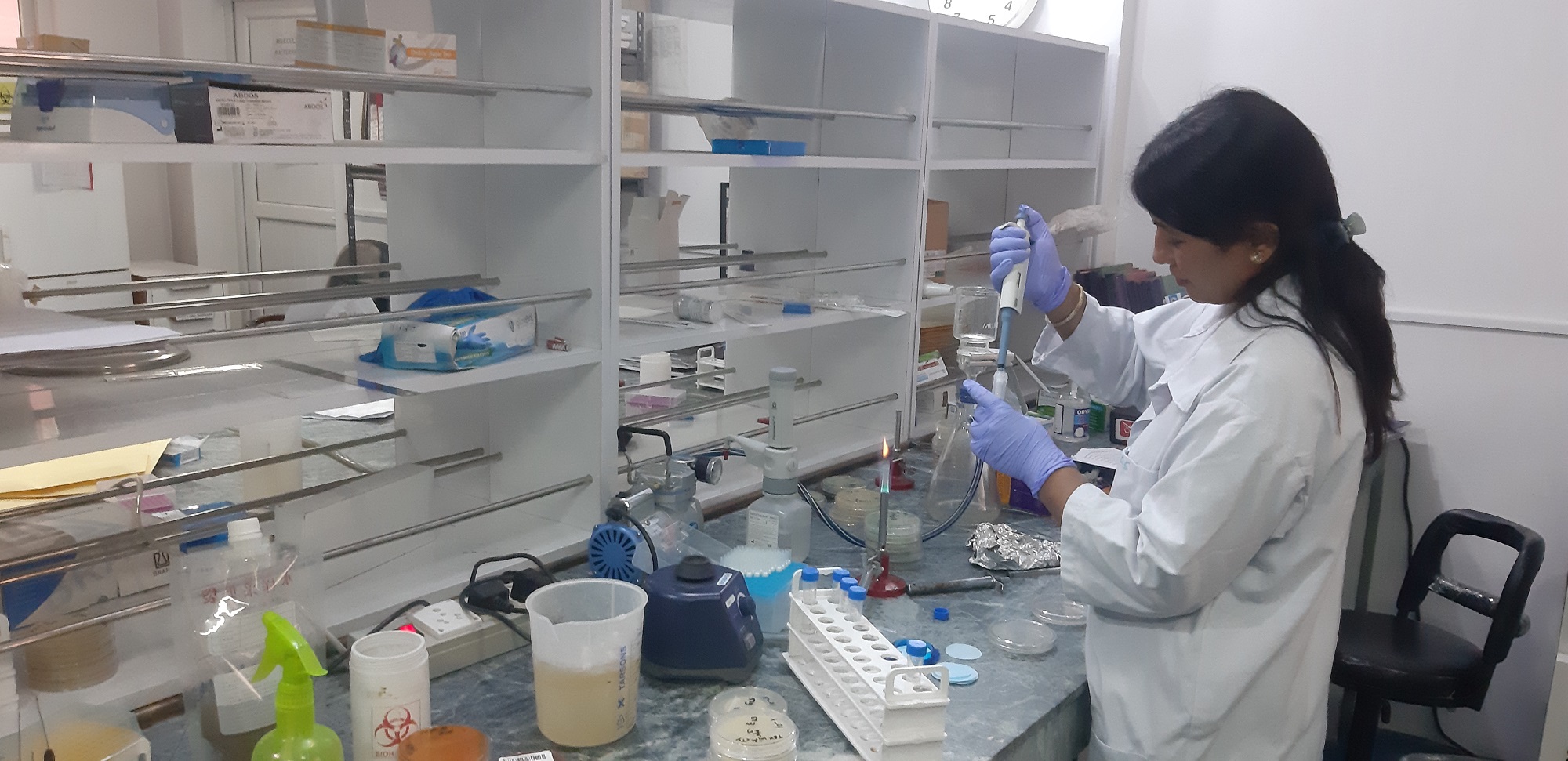
A medical lab technologist processing water samples as part of the ESBL E. coli Tricycle Project to detect AMR-causing organisms at the National Public Health Laboratory, Bagmati Province, Nepal. Photo credit: National Public Health Laboratory
Nepal has also made notable progress in strengthening integrated surveillance systems at the human-animal-environment interface. In 2022, the country conducted a Zoonotic Disease Prioritization exercise, identifying key diseases that require coordinated surveillance and response. This was followed by the development of a protocol for avian influenza surveillance in humans, guided by findings from the Zoonotic Influenza Distribution Assessment and Ranking System (ZIDAR). Similarly, the introduction of the Integrated Bite Case Management (IBCM) approach for rabies has further strengthened surveillance by linking human and animal health services, improving both prevention and response. Efforts to combat antimicrobial resistance (AMR) have also benefited from integrated surveillance, through initiatives such as the ESBL E. coli Tricycle Project, which have improved cross-sectoral data sharing.
Preparedness and Response

The launch of the Strengthening Pandemic Preparedness for Early Detection (SPEED) in Nepal project at the premises of the Ministry of Health and Population, Bagmati Province, Nepal. Photo credit: WHO Nepal/Ajay Maharjan
In 2024, Nepal launched the three-year project “Strengthening Pandemic Preparedness for Early Detection in Nepal (SPEED)”, aimed at enhancing core capacities under the International Health Regulations (2005). This initiative has supported improvements in early warning systems, joint outbreak response mechanisms, and laboratory networks– enabling more timely, coordinated and evidence-based action during health emergencies.
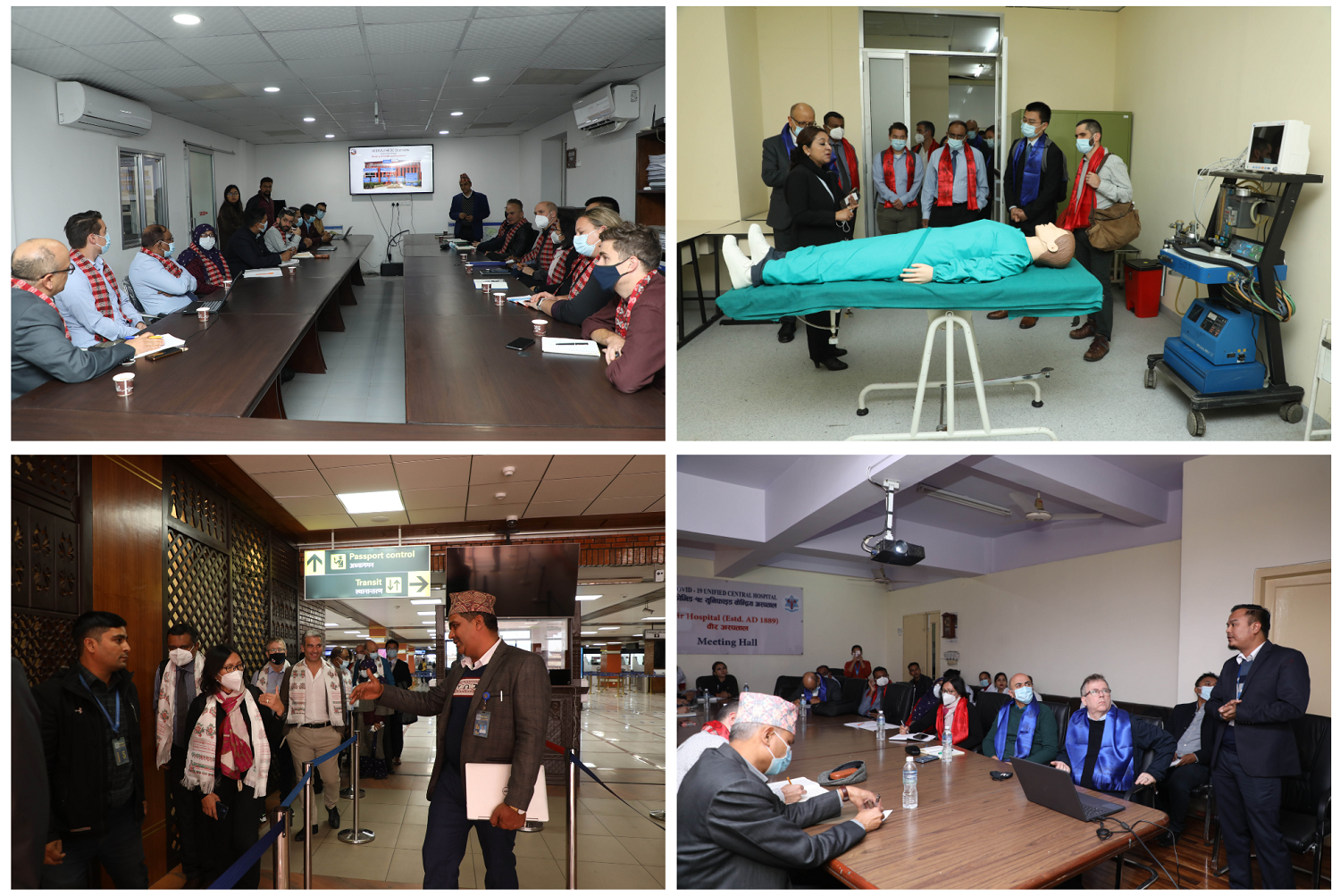
International experts visit multiple sites as part of the Joint External Evaluation in Nepal. Photo credit: WHO Nepal
Nepal has also taken important steps in monitoring and evaluating its preparedness. The country conducted its first Joint External Evaluation (JEE) in 2022 and completed its IHR State Party Annual Report in 2025.
In parallel, the country is advancing long-term preparedness through strategic planning. The development of the Multisectoral National Action Plan on AMR, the Multisectoral Dengue Prevention and Control Plan, the National Strategy and Action Plan for Rabies Elimination and the National IHR plan all reflect a shared commitment to strengthening preparedness and response.
Under the leadership of the Ministry of Health and Population, the country has also implemented initiatives to build climate-resilient health systems. Key policy frameworks include the Vulnerability and Adaptation Assessment (2022), the Health National Adaptation Plan (2023–2030) and the Baseline Assessment of Greenhouse Gas Emissions of Nepal’s Health Sector (2024).
Capacity Development
Strengthening institutional and workforce capacity is a central component of Nepal’s One Health strategy. To reduce foodborne risks, the country has focused on improving food system’s regulatory frameworks, intersectional coordination, and monitoring mechanisms. Efforts include building capacity for food inspection, foodborne outbreak investigation, while aligning national systems with international standards.
/countries/nepal/dsc_7102-2.jpg?sfvrsn=1a077b6e_8 "Practical demonstrations on the transportation of infectious clinical samples conducted during the workshop on safe shipping of infectious disease held in Bagmati province, Nepal")
Practical demonstrations on the transportation of infectious clinical samples conducted during the Infectious Sample Shipper's Training (ISST). Photo credit: WHO Nepal/Sujan Govinda Amatya
Similarly, the Infectious Sample Shipper’s Training (ISST) has equipped professionals from the human, animal and food sectors with IATA-certified shipping skills, reinforcing bio-risk management in line with the International Health Regulations. Additionally, targeted capacity development in laboratory diagnosis for diseases such as Nipah and anthrax has further advanced Nepal’s multisectoral outbreak response capabilities.
Capacity building has also been strengthened through research initiatives. Nepal hosted the AMR Structured Operational Research and Training Initiative (SORT IT), the first in the WHO South-East Asia Region. This initiative supports countries in conducting and applying operational research to inform public health decision-making. Notably, about 70% of SORT IT publications have reported an impact on policy and practice.
Communication and Advocacy
/countries/nepal/img_7860.jpg?sfvrsn=180762f_6 "Commemoration of World Health Day 2026 held at the National Health Training Centre, Bagmati Province, Nepal")
Nepal marks World Health Day 2026 with renewed commitment to One Health at a programme held at the National Health Training Centre, Bagmati Province, Nepal. Photo credit: WHO Nepal/Sujan Govinda Amatya
Nepal’s One Health communication and advocacy efforts focus on broad, cross-sectoral engagement to safeguard human, animal and environmental health. National campaigns tied to global observances such as those on chemical safety (lead poisoning), antimicrobial resistance, and rabies have raised public awareness and mobilized communities, youth and professionals beyond the health sector. Central to these efforts are risk communication and community engagement, with training programs strengthening the capacity of health workers to deliver trusted information and foster participation.
WHO’s contribution to One Health in Nepal
/countries/nepal/consultative-meeting-on-rabies-nsp-finalization_28-october_compressed.png?sfvrsn=cad7807e_3 "Consultative workshop to finalize the National Strategic Plan on rabies elimination held in Bagmati province, Nepal")
Consultative workshop to finalize the National Strategic Plan on rabies elimination held in Bagmati province, Nepal. Photo credit: WHO Nepal/Sujan Govinda Amatya
WHO has played a key role in advancing Nepal’s One Health agenda through sustained technical and operational support across sectors. This includes facilitating coordinated approaches to policy development, strategic planning, capacity building, outbreak investigation and response, and advocacy. The National Multisectoral Dengue Prevention and Control Plan (2026–2030) and the National Strategy and Action Plan for Rabies Elimination (2025–2030), developed with WHO’s support, underscore Nepal’s strong commitment to sustained, coordinated and long-term multisectoral action. At the operational level, WHO has enhanced national and subnational preparedness and response systems, including risk communication and raising awareness, strengthening surveillance and lab capacity, water quality monitoring and management, capacity building through training, and the development of technical guidelines and standards.
Challenges and the Way Forward
Despite notable progress, several challenges hinder the full implementation of the One Health approach. Surveillance systems across human, animal and environmental sectors are yet to be fully integrated. Regulatory gaps persist in food safety, prevent misuse of antimicrobials and environmental protection. Institutional silos, uneven capacity across government levels and limited financial resources further constrain implementation.
To fully realize the One Health approach in Nepal, targeted efforts are needed to address existing gaps. These include sustained investment in workforce capacity, enhancing integrated surveillance, antimicrobial resistance (AMR) stewardship and strengthening multisectoral coordination to build a resilient and fully integrated system.